
How many restrooms does a county fair need?
Start with attendance, not acreage. OSHA 1926.51(c) calls for 1 toilet per 20 workers on a construction crew, but a fairground with paying guests behaves differently: people cluster near food vendors, grandstands and livestock barns, and lines back up fast if you undercount. Las Cruces Porta Pros treats fair crowds like an event, not a crew, and works from expected daily attendance plus dwell time. A standard porta potty rental still anchors most layouts, priced by the day, week or event block shown below. For fairs running a full weekend, the event rate usually beats booking single days back to back.
| unit | duration | low | typical | high |
|---|---|---|---|---|
| standard | day | 100 | 150 | 350 |
| standard | event | 200 | 400 | 800 |
| standard | weekend | 125 | 250 | 400 |
Add at least one ADA accessible porta potty per cluster. ADA Standards section 213.2 requires 5 percent of clustered single-user units to be accessible, never fewer than one, and each unit needs a 60 inch turning circle inside per section 304.3.1. If your fair draws families expecting more comfort near the main gate, a deluxe flushable porta potty or a full restroom trailer rental handles that overflow without crowding the standard row. Not sure on the count? Run it through how many porta potties do I need before you commit to a layout.
Where should restrooms go on a fairground?
Close to the crowd, but out of the flow. Fairgrounds have three pressure points: the main gate, the grandstand or arena, and the food and vendor row. Each needs its own restroom cluster so nobody crosses the whole fairground mid-event. Placement also has to respect service access: delivery trucks need roughly 60 feet of straight clearance behind the unit to set it down, which matters on a fairground crowded with trailers, generators and vendor booths. Walk the site with our porta potty placement guide before gates open, not after.
Livestock barns are their own zone. Exhibitors and 4-H families need restrooms closer to the barns than the midway, and if there's hand-labor happening around animal areas, OSHA 1928.110 calls for one facility per 20 workers within a quarter mile walk, which is a good rule of thumb for barn-side placement even outside strict ag-labor settings. Vendors handling food should also have access to a handwashing station rental or portable sink rental near their booths; 29 CFR 1910.141(d)2 requires soap and towels or a hand-drying device at any washing station, not just sanitizer. If any vendor sprays coatings or treats fencing on-site, OSHA 1926.51(f)(1) requires washing facilities for that contaminant exposure specifically.
Multi-day fairs also generate real trash volume. A roll-off dumpster rental positioned near the vendor row keeps food waste and packaging from piling up between service runs, and temporary fence rental can pen off the service zone so guests don't wander into the delivery lane.
What does restroom service cost for a fair-sized event?
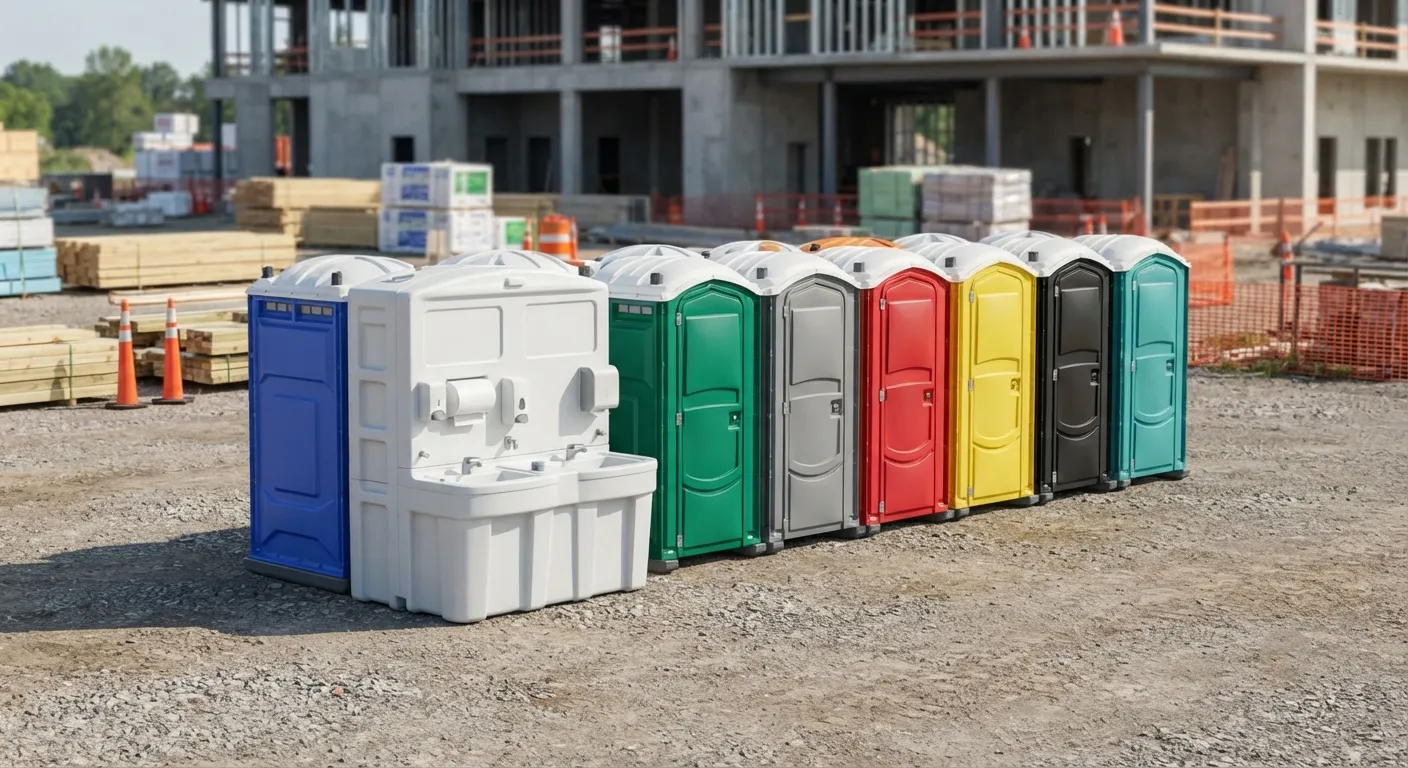
Budget by unit count and by day, not a flat guess. A weekend fair running 20 standard units at the typical weekend rate lands well above a single-day rental of the same units, because a fair's rental period spans setup, the event days and teardown. Delivery is its own line item, and for a fairground spread across several acres, expect the delivery fee to land toward the higher end of the range given the extra site access needed. Servicing during the event matters too: ANSI/PSAI Z4.3 sets one service visit per week as the baseline interval for light use, but a fair pushing thousands of visits a day needs same-day or twice-daily servicing to keep units usable, which Las Cruces Porta Pros scales into the quote.
| unit | duration | low | typical | high |
|---|---|---|---|---|
| standard | weekend | 125 | 250 | 400 |
| delivery_fee | weekend | 125 | 200 | 540 |
| service_fee | weekend | 400 | 700 | 1200 |
For a full cost breakdown across unit types, see porta potty rental cost or run the numbers against restroom trailer rental cost if you're adding a trailer for VIP or exhibitor use. Fairs near San Ysidro or Fairacres, both under 5 miles from central Las Cruces, often combine fairground service with porta potty rental in Las Cruces, NM for satellite parking lots too.
How far in advance should we book fair restrooms?
Book as soon as your fair dates are set, ideally 60 to 90 days out. Fairgrounds compete with weddings, festivals and construction jobs for the same inventory, and Las Cruces Porta Pros needs lead time to plan delivery routes across a large site. Request a quote early through request a quote.
Do we need separate restrooms for vendors and the public?
Not strictly, but it helps. Vendors need frequent access during long shifts, while public units see burst traffic around events. Separating them by zone, covered in the construction site services approach to worker facilities, cuts wait times for both groups significantly.
Can we add handwashing stations near food vendors?
Yes, and most fairs should. Food vendors handling raw ingredients benefit from a dedicated hand sanitizer station rental or a full sink setup, since 29 CFR 1910.141(d)(2) requires soap and towels for genuine handwashing compliance, not sanitizer alone.
What happens if we run out of restrooms mid-fair?
Call for an emergency add. Las Cruces Porta Pros keeps standard units in reserve for exactly this, and same-day delivery is possible depending on fleet position; see emergency porta potty rental for details.
Do fairgrounds need fencing around restroom clusters?
Sometimes, especially near barns or equipment. Temporary fence rental keeps foot traffic organized around larger clusters and protects service access lanes from being blocked by parked vehicles or vendor stock.
Next step
Get a delivery date
Tell us the address, the dates and the headcount. We size the order and confirm the route.